

The Origins: 1920s–1940s
The mixing console wasn't born in a recording studio — it was born in radio. In the early days of broadcast, engineers needed a way to combine multiple microphone signals into a single output for transmission. The result was a rudimentary fader-and-summing network that gave operators basic level control.
These early consoles were simple by any modern standard — no EQ, no auxiliary sends, no channel inserts. Just gain control and a mix bus. But the concept of routing and combining audio signals was established, and it would define studio technology for the next century.
The 1950s: Mono to Stereo
The transition from mono to stereo recording in the 1950s was a watershed moment for console design. Studios needed the ability to place sounds in a stereo field, which introduced pan pots — the knobs that route a signal left or right across the stereo image. RCA, Ampex, and a handful of boutique builders began producing consoles purpose-built for music recording.
Studios like Sun, Chess, and Atlantic developed their own in-house mixing setups during this era, and the sound of the console became inseparable from the sound of the records being made on it.
The 1960s: The British Invasion — of Console Manufacturers
If one decade defined the modern mixing console, it was the 1960s — and the British were largely responsible. EMI's custom-built consoles at Abbey Road were central to the sound of the Beatles. Independent designers began building desks with discrete transistor circuitry that gave recordings a warmth and character that remains sought-after to this day.

The 8-track recorder — introduced mid-decade — forced console designs to expand dramatically. More tracks meant more channels, more routing options, and the need for auxiliary buses to feed external reverb and echo units. The modern channel strip was beginning to take shape.
The 1970s: Neve, SSL, and the Golden Age
The 1970s are widely regarded as the golden age of analog console design. Rupert Neve's consoles became the industry standard for studios wanting rich, harmonically dense recordings. The transformer-balanced inputs and discrete Class A circuitry in a Neve 8078 or 8028 produced a sound that engineers still chase today.
Simultaneously, SSL (Solid State Logic) entered the market with consoles that prioritized recall and automation. The SSL 4000 series introduced a Total Recall system that let engineers document every knob position on a session — a revolutionary concept at a time when re-creating a mix meant hours of manual reset work.
The 1970s also saw the rise of large-format consoles with 48 or more channels, in-line monitoring sections, and sophisticated routing matrices. Studios like Record Plant, Electric Lady, and AIR London were built around these desks.
The 1980s: Automation and the Digital Frontier
By the 1980s, automation had moved from a luxury to a necessity. As multitrack recording expanded to 24 and 32 tracks, the complexity of a final mix exceeded what any human could manage manually. Console manufacturers integrated VCAs (Voltage Controlled Amplifiers) into fader designs, allowing computer-controlled automation of levels across every channel simultaneously.
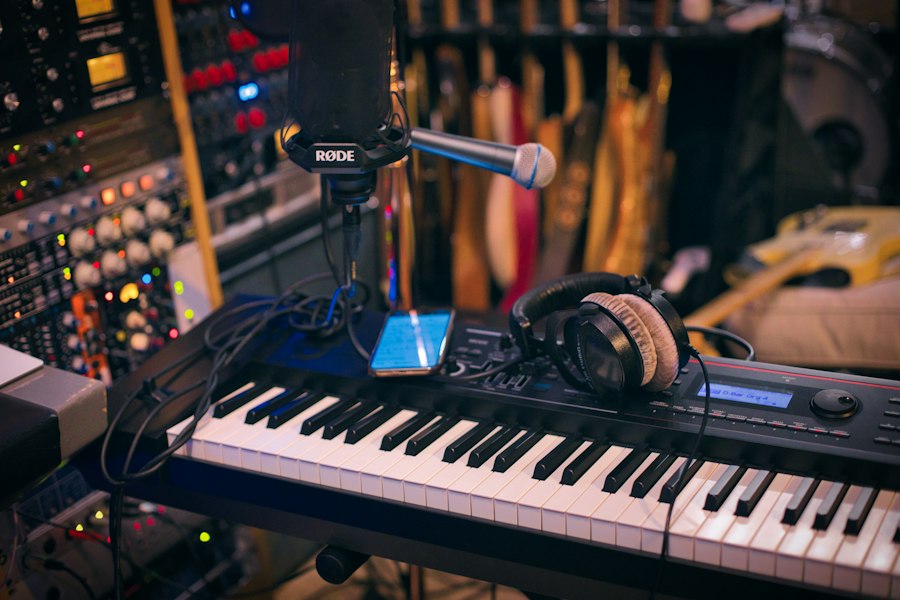
The SSL G-Series and the Neve VR became the consoles of choice for the decade's biggest productions. Meanwhile, the first digital mixing consoles began to appear — primitive by later standards, but significant in demonstrating that audio mixing could be processed numerically rather than electronically.
The 1990s: Digital Takes Hold
The 1990s brought a fundamental shift. Yamaha's 02R, released in 1995, was the first affordable fully digital mixing console and it changed the industry overnight. Digital consoles offered perfect recall, built-in effects processing, and a price point that made them accessible to project studios for the first time.
Simultaneously, Pro Tools — first released by Digidesign in 1991 — began migrating the mixing environment from hardware to software. By the late 1990s, many engineers were mixing entirely inside a computer, using virtual faders on a screen instead of physical knobs on a desk.
The 2000s and Beyond: The DAW Era
The 2000s completed the transition that the 1990s began. Digital Audio Workstations — Pro Tools, Logic, Ableton, Cubase — became the primary mixing environment for the majority of the world's recordings. The physical console didn't disappear, but its role changed. Large-format analog consoles became luxury items, prized for their sound and workflow rather than their necessity.
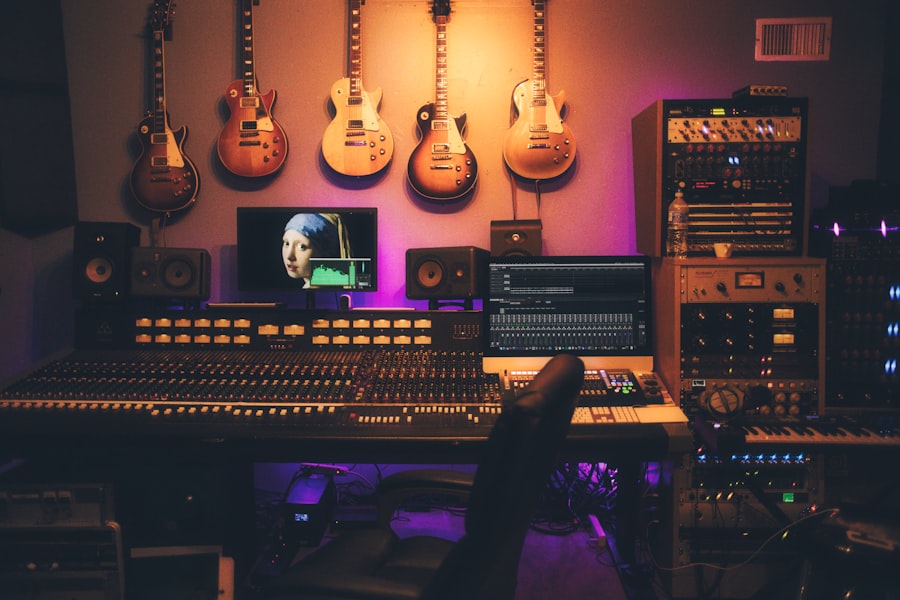
Control surfaces — hardware controllers that physically map to a DAW's virtual mixer — emerged as a hybrid solution, giving engineers the tactile feedback of a physical desk while operating entirely in the digital domain.
Where We Are Now
Today, the mixing console exists across a spectrum. At the top of the market, studios still invest in vintage Neve, API, and SSL desks — restored, maintained, and celebrated for the character they impart on recordings. Mid-tier hybrid setups combine a small analog desk with a DAW for the best of both worlds. And at the project studio level, a laptop, an audio interface, and a DAW represent everything a mixing console once was.
The democratization of mixing technology is perhaps the console's greatest legacy. What once required a multi-million-dollar room full of hand-wired circuitry can now happen on a laptop in a bedroom — and the music being made there is as compelling as anything that ever came off an SSL.
For producers and drummers building sample libraries and loop packs, understanding the history of the mixing console is understanding the history of how recorded sound was shaped, sculpted, and delivered to the world.